Summary
The gap between a “supercar” and a “hypercar” isn’t just a matter of price—it’s a matter of physics. While the Lamborghini Huracán is an engineering marvel, its factory aerodynamics were never intended for the 300mph (480kph) territory occupied by Bugatti and McLaren.
The Result: 7X Design bridged this gap by taking a donor Huracán and evolving it into the Rayo. By utilizing AirShaper’s cloud-based CFD platform, they achieved a transformation typically reserved for multi-million-dollar OEM programs: increasing power by 233% while slashing drag by 28.5%, effectively turning a production vehicle into a world-record contender.
The ChallengeBreaking the Performance Ceiling: Triple the Horsepower
Few road cars can exceed 250 mph. To move from the Huracán’s native 200-mph ceiling to a 300-mph target, the team had to solve a brutal equation: triple the horsepower (to 2,000 bhp) and radically lower the drag coefficient, all while maintaining the car’s structural integrity and road-legal status.
The project, initiated by 7X Design founder David Gomez, faced significant practical limitations. The car needed to remain road-legal, maintaining original ramp angles and structural elements like the roof and windshield.
“The brief was pretty straightforward: We had to re-engineer the aerodynamics of a car with around triple its original horsepower to create a matching aero body that would allow it to achieve its best top speed.”

The aerodynamic program focused on three critical pillars:
- Drag Reduction: Hitting the 300mph (480kph) target.
- Aerodynamic balance: Ensuring front-rear stability at terminal velocity.
- Down Force Management: Limit the total amount of downforce so the car doesn’t get “squashed” at high speeds.
Key Hurdles:
- Structural Limits: The roof, windshield, and A-pillars remained stock, creating a non-negotiable "greenhouse".
- Stability: At 300 mph, even minor turbulence can become catastrophic. The car needed just the right amount of downforce to avoid “squashing” the car on its suspension.
- Thermal Management: Evacuating the massive waste heat generated by 2,000 bhp.
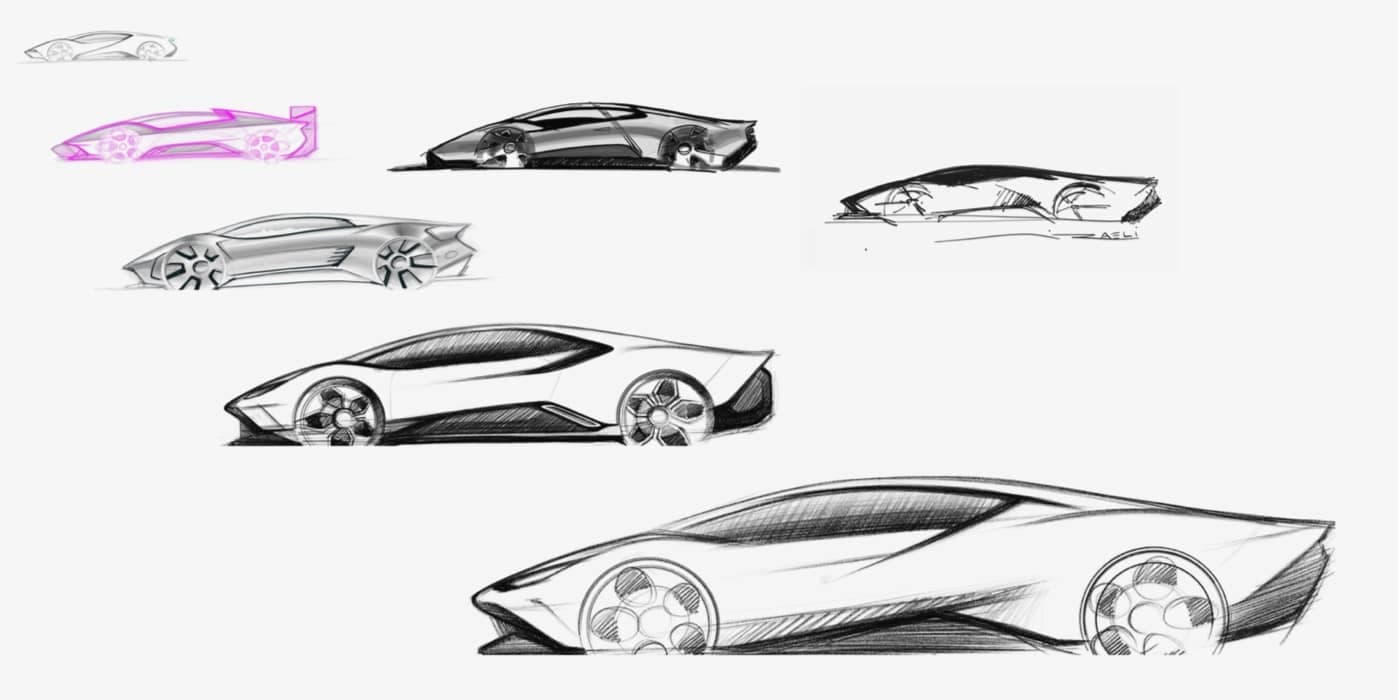
Design Evolution through AirShaper’s generative AI tools
AirShaper’s AI Morphing tool was instrumental in evolving the aerofoil profile without requiring complex initial math. AirShaper acted as the bridge between the artistic vision of designer Adriano and the rigorous demands of 300 mph physics.
1. Winglet Evolution via the AI Morphing Tool
To achieve hypercar speeds, the team moved away from traditional high-drag spoilers.
- The Outcome: By replacing the rear wing with two specialized winglets, they placed the aero-elements in “cleaner air.”
- The Tech: AirShaper’s morphing tool was used to optimize the aerofoil profile without requiring a massive team of full-time aerodynamicists.

2. Underbody & Diffuser Optimization
AirShaper’s shape optimization tool transformed the underfloor from a flat, square cross-section into a complex, rounded central tunnel system.
The Result: The right amount of downforce that keeps the car glued to the track at 270+ mph, while reducing drag in the process.
3. The Air Curtain
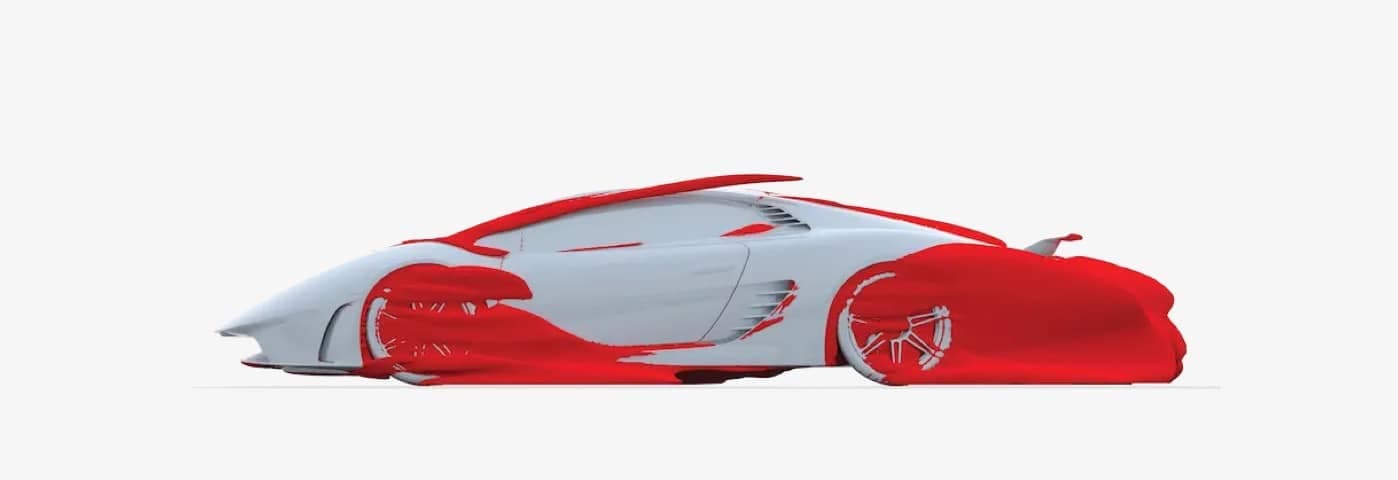
To shield the wheels—one of the primary sources of drag—AirShaper helped design intricate air curtains within the front bumper.
- The Mechanic: High-pressure air is accelerated through channels and ejected along the side of the car to create a “shield” of air.
- The Result: Reduced turbulence around the wheel wells and improved laminar flow along the chassis.
4. Real-World Thermal Management
A 2,000-hp engine is essentially a massive heat furnace. AirShaper was used to design rear extraction grilles that evacuate waste heat into the "wake" of the car, helping to reduce the base drag.
Small Team, Enterprise-Grade Performance
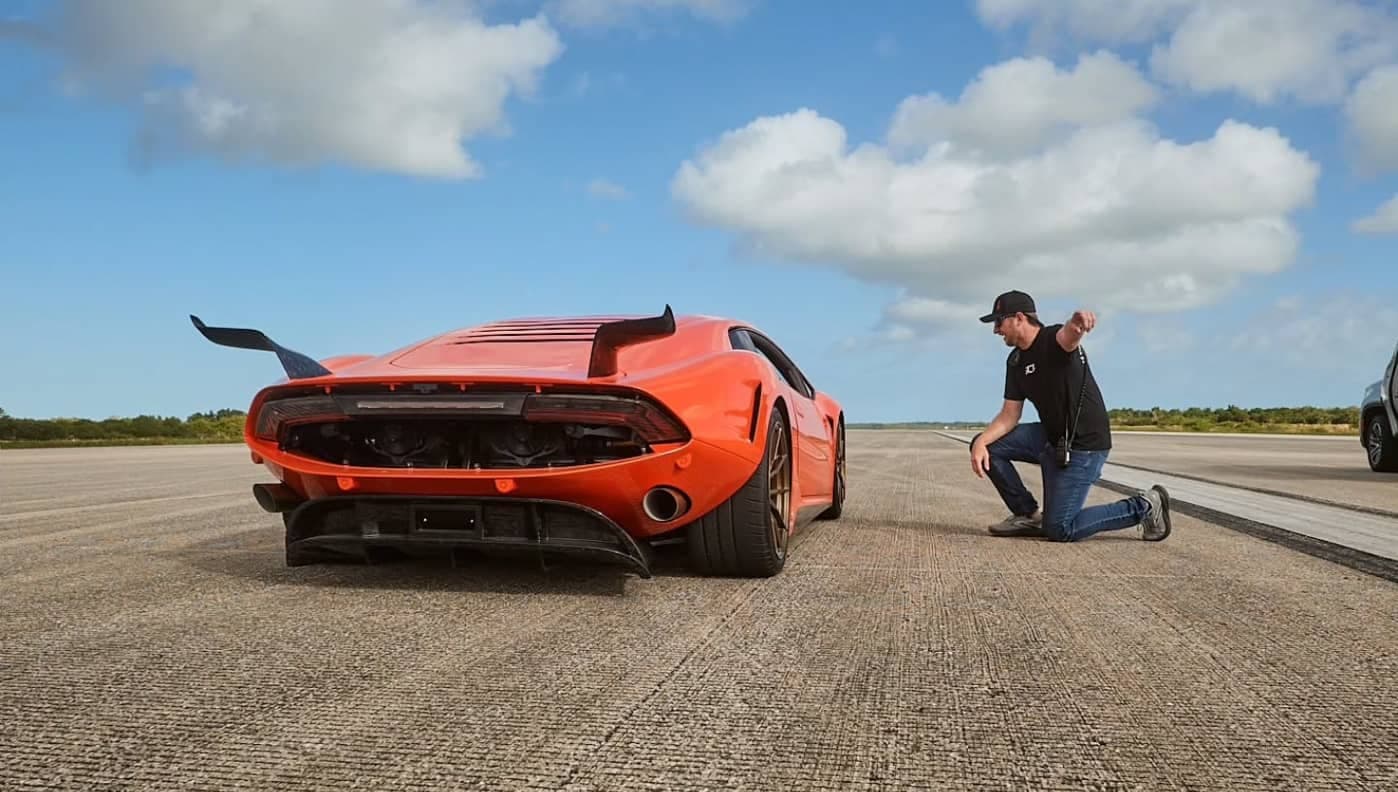
In initial testing at the IDIADA track in Spain, the Rayo hit 278 mph (447 kph) — surpassing the top speeds of almost every production supercar on the planet.
“Our small team, together with AirShaper’s expertise and the knowledge of the people who built the car, allowed us to upgrade the Lamborghini Huracán to achieve those ambitious speeds. I think that’s a pretty big accomplishment.”
The Transformation: By the Numbers
AirShaper enabled the team to achieve elite-level efficiency that typically requires tens of millions in R&D.
The shift from “Super” to “Hyper” is best viewed through the lens of data-driven results:
| Metric | Factory Huracán → 7X Design Rayo |
|---|---|
| Power | 600 bhp → 2,000 bhp (+233%) |
| Drag Coefficient (Cd) | ~0.39 → 0.279 (28.5% reduction) |
| Downforce | Standard → 2× Original (+100%) |
| Top Speed (Tested) | 202 mph → 278 mph / 447 kph (+78 mph) |
“What we have here is a great achievement… [Large companies] usually have to invest millions of dollars in R&D and a lot of time. Whereas our small team, together with AirShaper’s expertise… allowed us to upgrade the Lamborghini Huracán to achieve those ambitious speeds.”
Conclusion
AirShaper isn’t just for specialized aerodynamicists; it’s a vital tool for designers. The platform allows for rapid “volume changes” to be tested in real-time, helping teams understand how a design tweak in the nose or tail affects the entire vehicle’s aerodynamic pressure field.
For Enterprise Clients, AirShaper provides the heavy-duty CFD power required for complex OEM-level projects like those handled by the Envisage Group. It allows for rapid testing of “what-if” scenarios without the overhead of traditional wind tunnel testing.
For Startups, AirShaper represents the “aspirational edge.” It proves that with the right cloud-based tools, a small, dedicated team can compete with the giants of the automotive world.