Summary
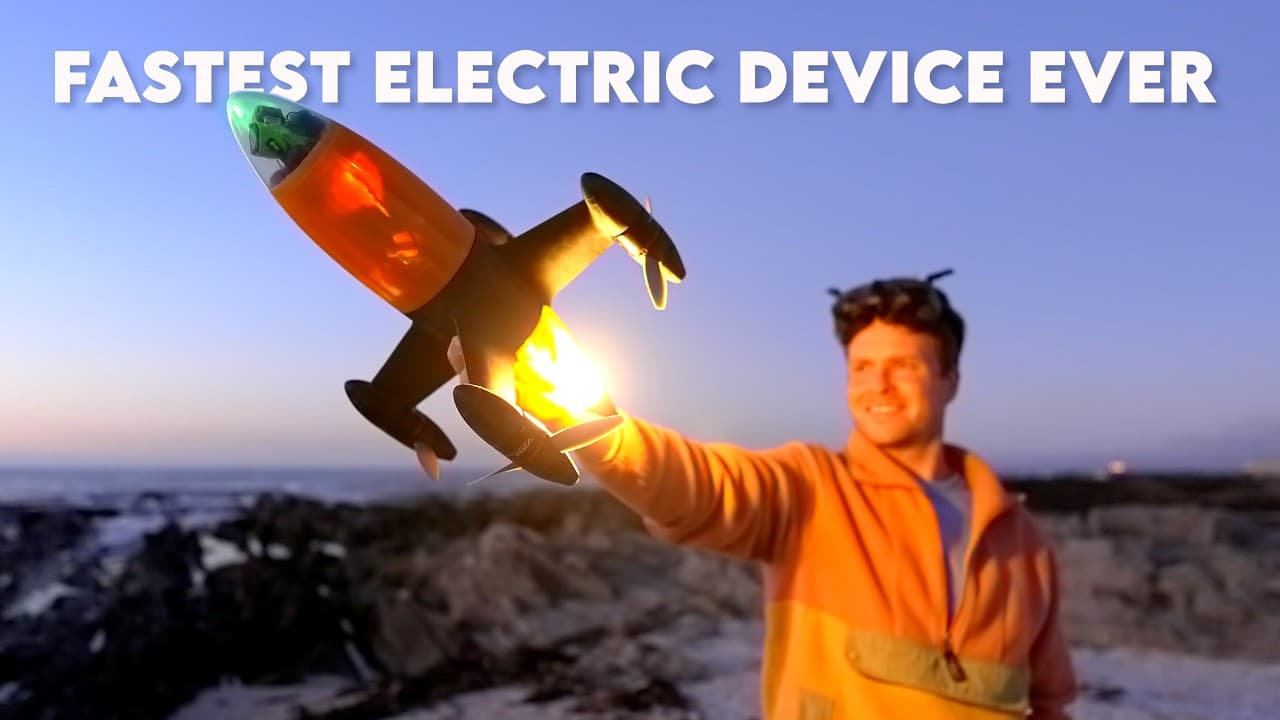
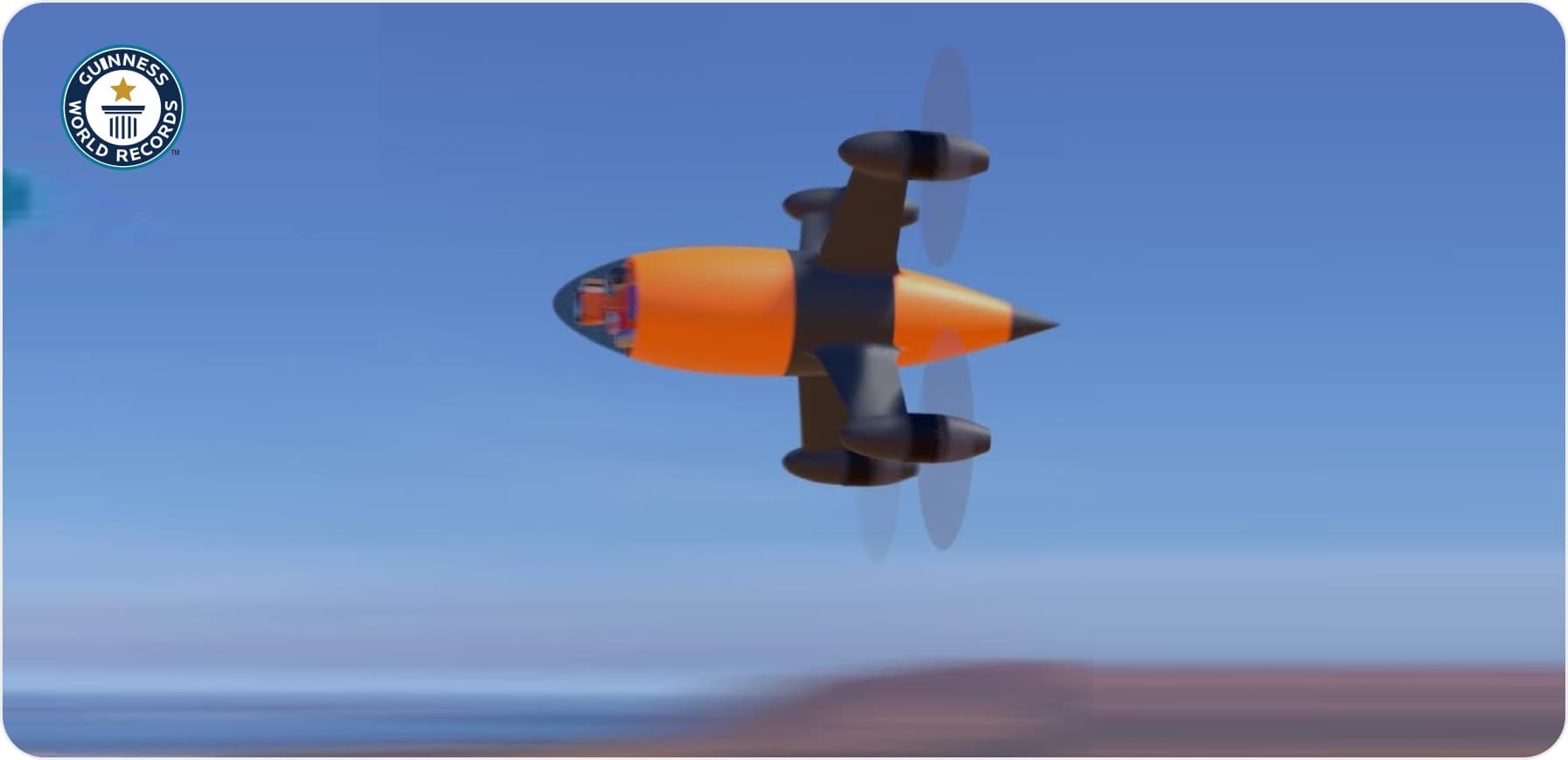
Luke Maximo Bell and his father set out to build the world’s fastest battery-powered quadcopter. Through two generations of development (V3 and V4), the team faced extreme engineering hurdles: catastrophic ESC fires, high-speed oscillations, and the literal “wall of air” at 400+ kph.
The Result: By integrating AirShaper’s cloud-based CFD platform, they moved beyond trial-and-error to data-driven design. This allowed them to achieve “passive stability,” optimize thermal cooling, and minimize drag, ultimately leading to two world records—culminating in an official Guinness World Record average of 657 kph (408 mph).
The ChallengePiercing the Aerodynamic Wall
When a drone travels at half the speed of sound, traditional design rules break down. The project faced three primary “deal-breakers”:
- Aerodynamic Drag: Drag increases with the square of speed. At 600 kph, even a minor protrusion creates massive resistance, sucking battery power and generating heat.
- High-Speed Instability: Early prototypes (V3) suffered from violent side-to-side oscillations over 350 km/h, making the drone impossible to control.
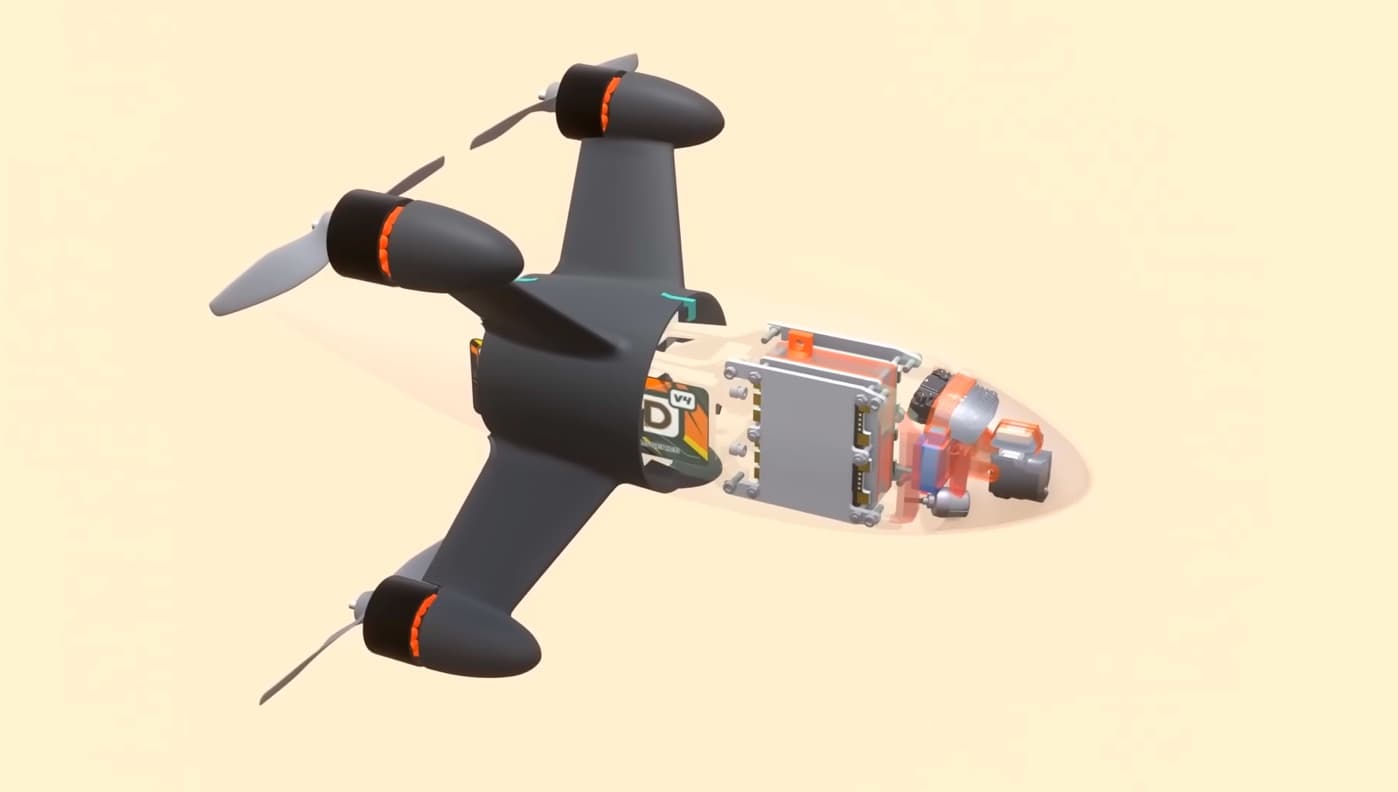
- Thermal Management: The 22-horsepower power system generated enough heat to melt components. The team needed to cool the electronics without adding bulky, high-drag air intakes.
Overcoming Physical Limits with AirShaper
To break the record, the team needed professional-grade aerodynamics. They turned to AirShaper to simulate and refine their designs in a virtual wind tunnel.
1. Achieving Passive Stability
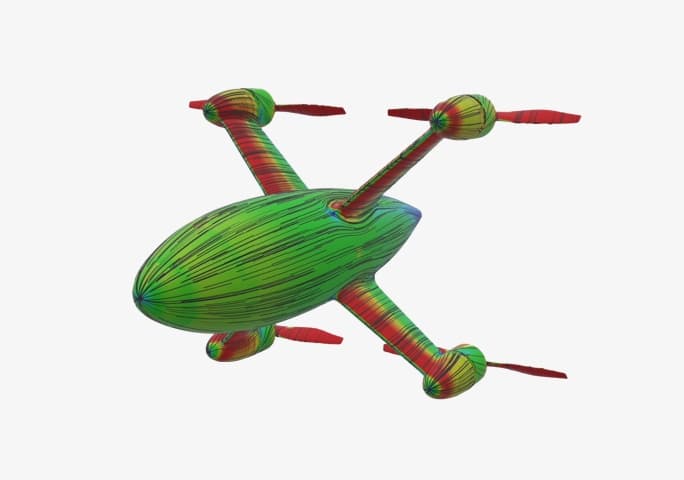
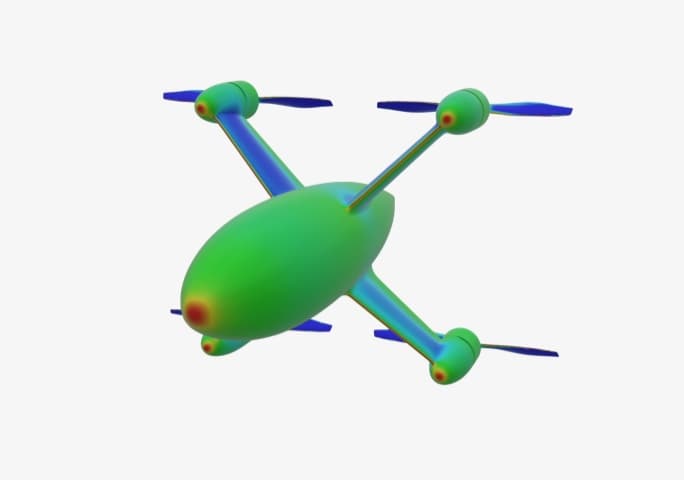
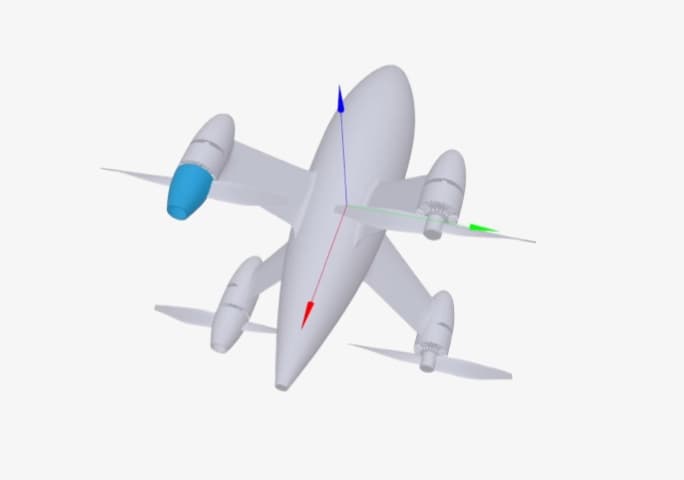
Before the V3 record, the team used AirShaper to solve the oscillation issue. By simulating airflow and Center of Gravity (COG) placement, they identified a design that provided “passive stability.” This ensured the drone would naturally tend to fly straight, allowing the motors to focus 100% of their energy on forward thrust rather than stabilizing corrections.
2. Maximizing Net Thrust
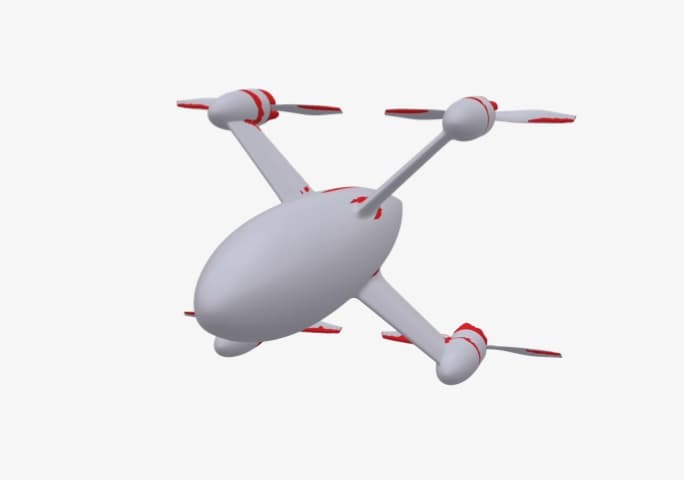
For the V4 drone, AirShaper helped refine the body shape even further. The simulations revealed a counter-intuitive truth: a slightly larger, more contoured body was actually more efficient than a smaller, “boxier” one. This optimization reduced the aerodynamic penalty, directly translating to a higher top-end speed.
3. Surface & Material Refinement
The CFD data emphasized that at these speeds, surface friction matters. Following the digital optimization, the team 3D printed the body in Carbon Fiber Nylon (PA6-CF) and painstakingly sanded and polished the surface to match the low-drag profiles predicted by AirShaper.
“Over the past few months, my dad has run tons of CFD simulations on AirShaper to optimize the body shape, reduce drag, and increase our net thrust overall.”

From Hobbyist Prototype to Double World-Record Engineering Feat
The collaboration between Luke Maximo Bell’s engineering and AirShaper’s simulation power resulted in a historic double-victory:
Performance Gains at a Glance
| Milestone | Top Speed (Peak) |
|---|---|
| Peregreen V3 | 585 km/h (363 mph) — Unofficial Record |
| Peregreen V4 | 659 km/h (409 mph) — 657 km/h (408 mph) |
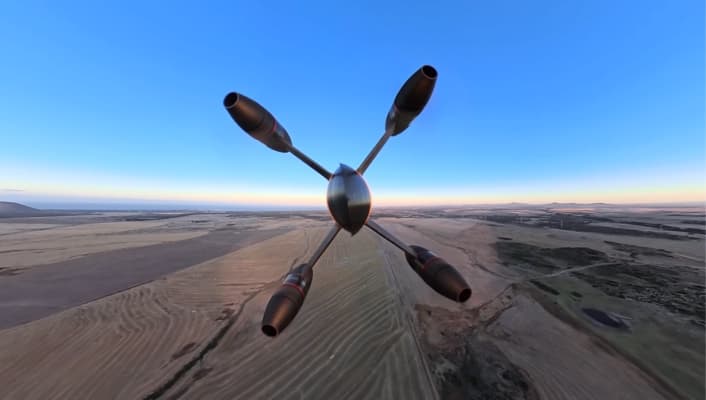
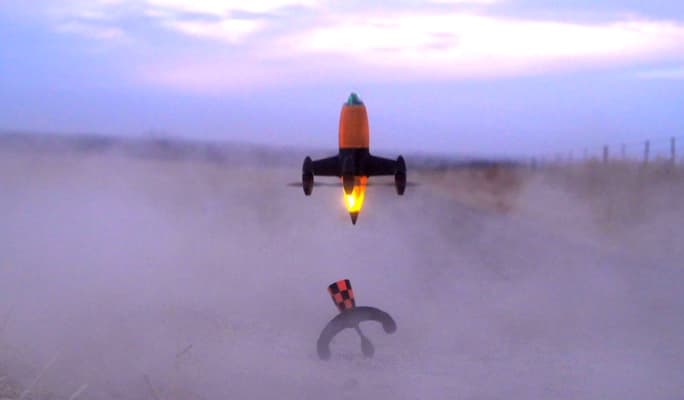
The V4 flight secured the official Guinness World Record, making it the fastest battery-powered RC aircraft in the world.
“During the entire design process, we’ve been using AirShaper extensively… to optimize every single aspect of this drone design to minimize drag and get the maximum speed possible.”
Conclusion
Breaking a world record twice requires more than just luck; it requires the ability to see the invisible—the airflow. AirShaper provided the team with the “eyes” to see where drag was holding them back and the data to fix it. By bridging the gap between digital simulation and physical manufacturing, the team proved that with the right tools, even the most ambitious records are meant to be broken.
Watch the record-breaking run: Experience the incredible speed and the engineering journey behind the V4 drone in the full video: