Summary
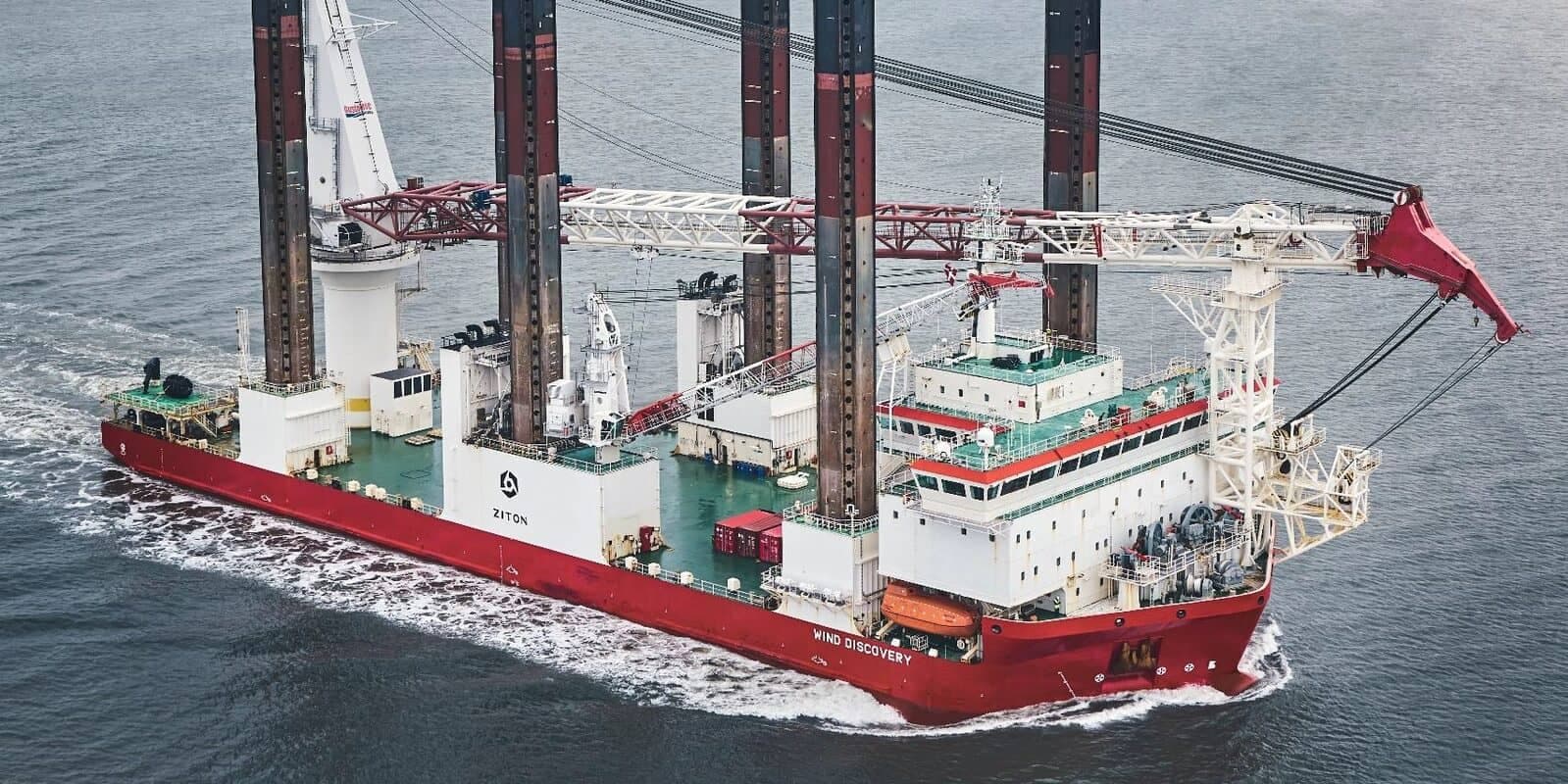
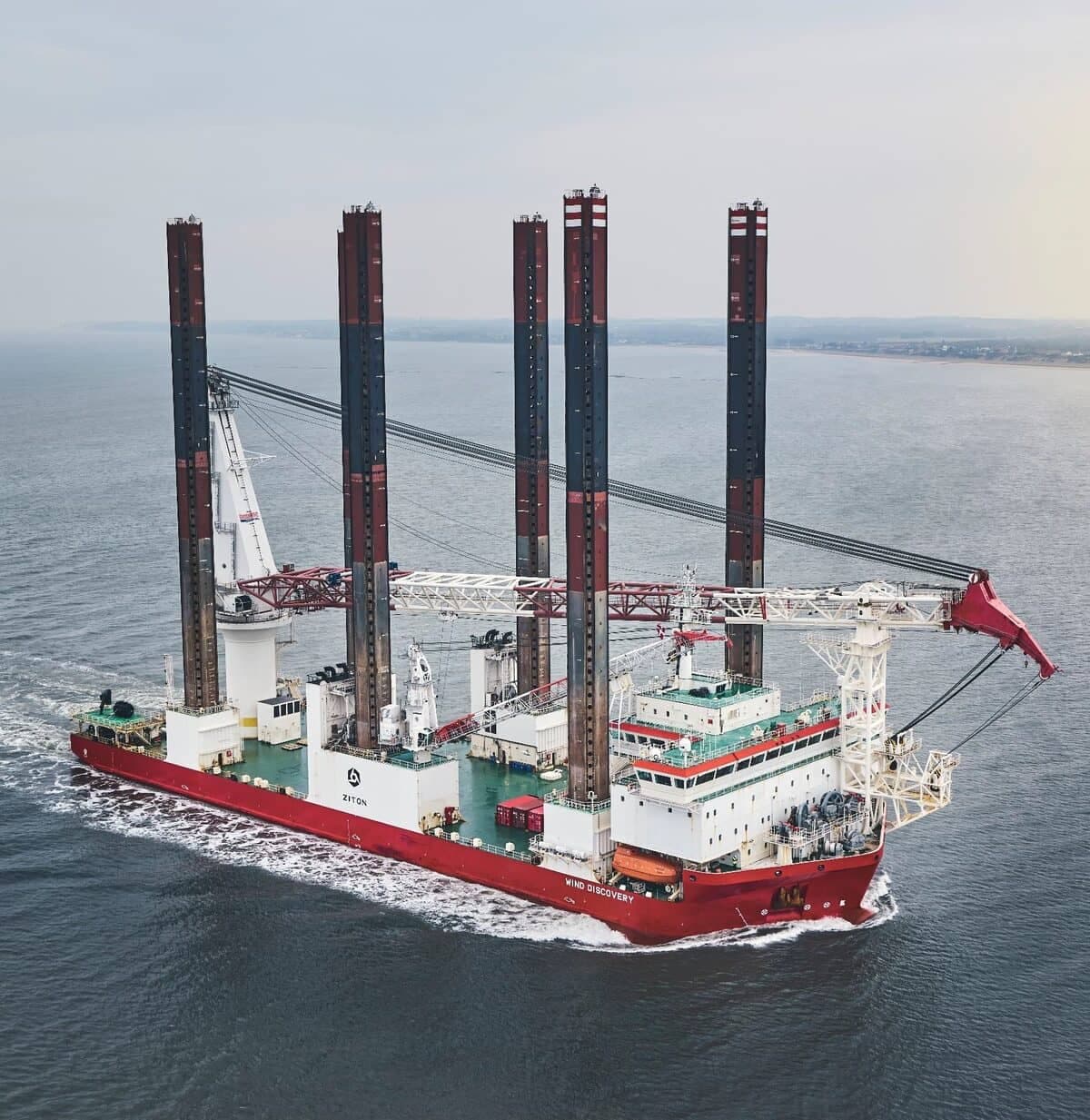
ZITON is the largest dedicated provider of jack-up vessels for offshore wind operations and maintenance: major component replacements, blade campaigns and decommissioning. When ZITON installed a new helideck on the bow of WIND DISCOVERY, its largest jack-up, the Helideck Certification Agency (HCA) required a CFD study of the turbulence above the deck before the helideck could be certified.
ZITON turned to 7Waves, a Norwegian naval architecture and marine engineering consultancy, to own the full study. 7Waves agreed the design basis with HCA in February 2026, ran the steady-state CFD campaign in AirShaper and delivered the final report in May 2026.
The result: the new helideck is acceptable across almost the whole practical operating range. Only winds from the stern sector need an operational restriction, and no modification to the helideck was required.
Proving a Bow Helideck Is Safe to Fly To
WIND DISCOVERY is a large jack-up: when it stands on its legs, the deck, the accommodation block and the main crane all rise well above the sea. A helideck mounted on the bow sits downstream of all of that structure for certain wind directions, and the wakes shed from cranes, leg towers and deckhouses can create turbulence right where a helicopter needs to hover.
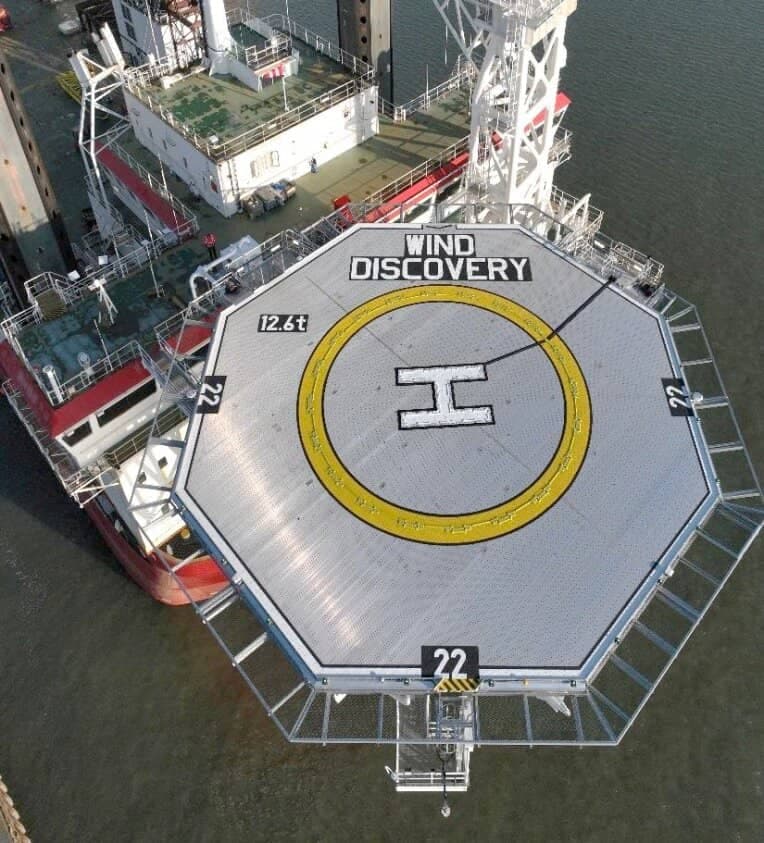
The UK Civil Aviation Authority’s CAP 437 standard, applied by HCA through its Helideck Monitoring System (HMS) requirements, sets limits on the vertical turbulence a helicopter may encounter above a helideck. For a new or modified helideck, those limits have to be demonstrated with a CFD study covering the relevant wind directions and speeds. The study has to be rigorous enough to satisfy the certifier, but it also has to deliver something ZITON can actually use on board: clear operational wind limits per wind direction.
The SolutionA Full CAP 437 Study, Owned by 7Waves and Run in AirShaper
7Waves took ownership of the entire study, from the design basis to the certification report, and used AirShaper as the CFD platform. AirShaper supported the methodology along the way and, in addition to the study, ran a transient simulation to showcase its latest transient capabilities.
Design basis agreed with HCA
Before any simulation was launched, 7Waves agreed the design basis and methodology with HCA against CAP 437 and the HCA HMS requirements. This fixed the operating condition, the wind directions and speeds, the wind profile and the turbulence criteria that the results would be judged against.
A full-vessel model in its worst-case configuration
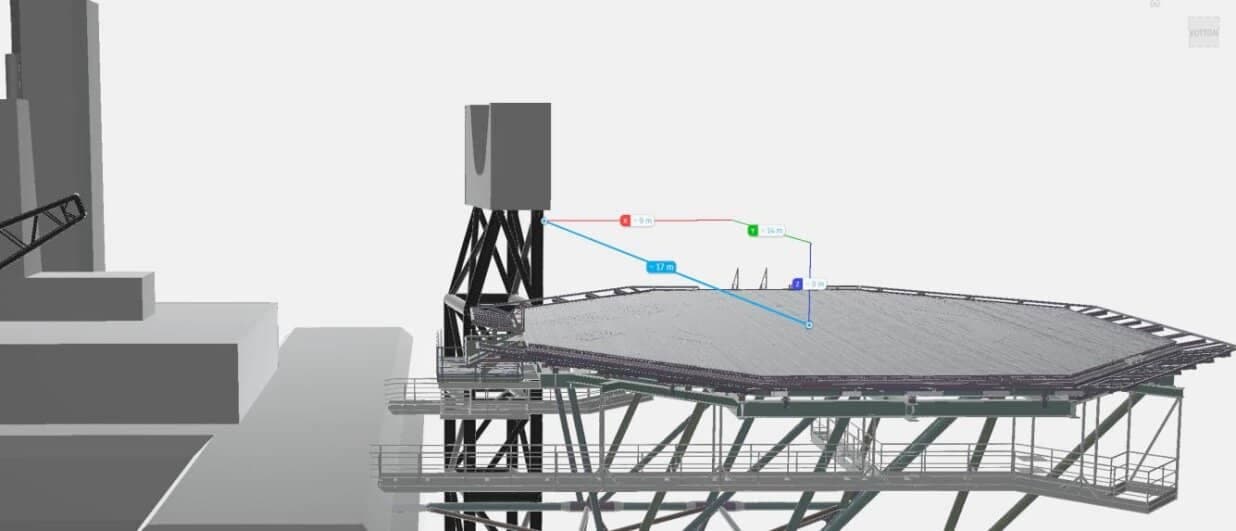
7Waves built a 3D model of the complete vessel in Autodesk Inventor, in the configuration that matters for helicopter operations:
- Jacked up to an air gap of 15 m, placing the helideck roughly 46 m above mean sea level
- Cranes positioned in a realistic worst-case orientation relative to the helideck
- Reference height for wind speed measurements at 10 m above the helideck, 56 m above sea level
Steady-state RANS CFD in AirShaper
The campaign consisted of steady-state RANS simulations in AirShaper, covering the wind directions relevant to the helideck:
- Stern wind at 12.5, 15, 17.5 and 20 m/s, to resolve where the turbulence limits are crossed in the sector affected by upstream structures
- Head, port and starboard winds at 22.5 m/s
Wind speeds were defined at 10 m above sea level and applied through a logarithmic wind profile according to Eurocode 1991-1-4, terrain category 0 (open sea). Because every simulation runs in the cloud, the directions and speeds could be launched in parallel instead of one after the other.
Automated post-processing against CAP 437 limits
CAP 437 expresses its turbulence criterion as the standard deviation of vertical wind speed, with limits of 1.75 m/s and 2.4 m/s. 7Waves built an automated ParaView pipeline that takes the turbulent kinetic energy from each AirShaper result, converts it to a vertical velocity standard deviation (σw = √(2k/3)) on slices through the rotor-critical volume above the deck, and compares it directly with those limits. Every simulation is processed the same way, so wind speeds and directions can be compared on an equal footing.
Transient simulation
In addition to the study, which was performed using steady-state simulations, AirShaper also performed a transient simulation with a 20 m/s stern wind. This was done as a showcase of AirShaper's latest transient simulation capabilities, which can be applied to further increase the level of detail of future studies.
The recording below walks through the transient results in AirShaper: first the averaged flow field results for surface pressure, friction, streamlines and slices through the flow, followed by transient visualizations of pressure, friction and vorticity. Lastly, the force and moment interface per component is shown.
Clear Operational Limits, No Design Changes
The simulations confirmed what the geometry suggests: upstream structures increase the turbulence above the helideck, and the effect is concentrated in winds coming from the stern. 7Waves identified a critical sector of 115°, centred on wind from the stern, in which the CAP 437 limits are reached at lower wind speeds. For all other directions the helideck stays well within the limits.
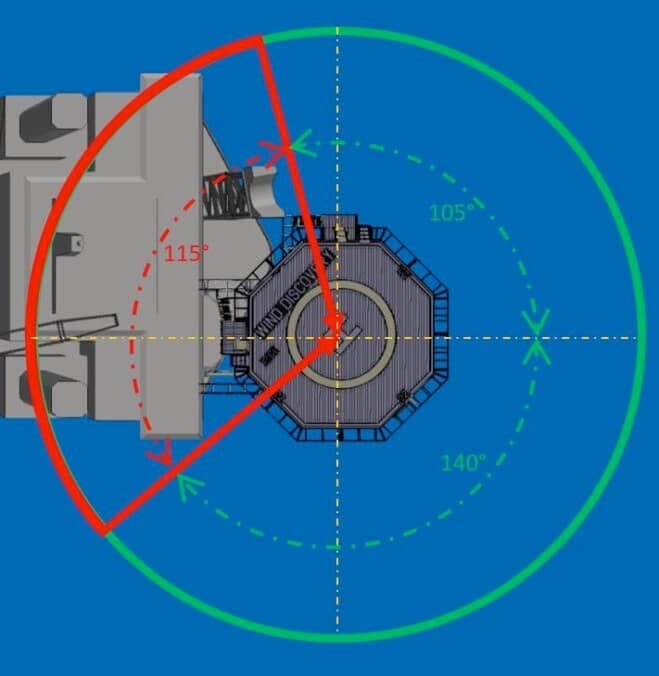
From these results 7Waves derived traffic-light operational wind limits, defined at the wind sensor 10 m above the helideck (56 m above mean sea level):
| Wind direction | Green | Orange | Red |
|---|---|---|---|
| Critical sector (115°, stern) | < 15.2 m/s | 15.2 – 24.2 m/s | > 24.2 m/s |
| Non-critical sectors | < 27.3 m/s | > 27.3 m/s* | > 27.3 m/s* |
* Orange and red limits were not assessed for the non-critical sectors, since the green threshold is already above the range at which helicopter operations take place.
For context, helicopter operations normally stop at around 30 knots, roughly 15 to 20 m/s at the wind sensor height. Outside the critical sector, the helideck is therefore usable across the whole practical operating range. Inside the critical sector, the green limit of 15.2 m/s sits at the lower end of that range, so stern winds are the only case where the helideck restricts operations earlier than the helicopter itself would.
Conclusion
Certifying a helideck is a regulatory exercise with real operational consequences: an over-conservative result costs a vessel flying days, and a modification to the deck costs far more. By owning the study end to end and running the CFD campaign in AirShaper, 7Waves was able to agree a methodology with the certifier, simulate the full vessel in its worst-case configuration across all relevant wind directions, and turn the results into operational limits the crew can apply directly.
For offshore engineering consultancies, this case shows how cloud CFD fits into a certification workflow: 7Waves kept full control of the design basis, the modelling and the post-processing, while AirShaper provided the simulation platform, methodology support and a transient simulation showcasing what future studies can add.