Summary
EIVA is a Danish engineering company with over 45 years of experience in the offshore and shallow-water engineering, survey and inspection industries. Its ScanFish family of towed vehicles carries survey sensors through the water behind a vessel, flying at a controlled depth above the seabed.
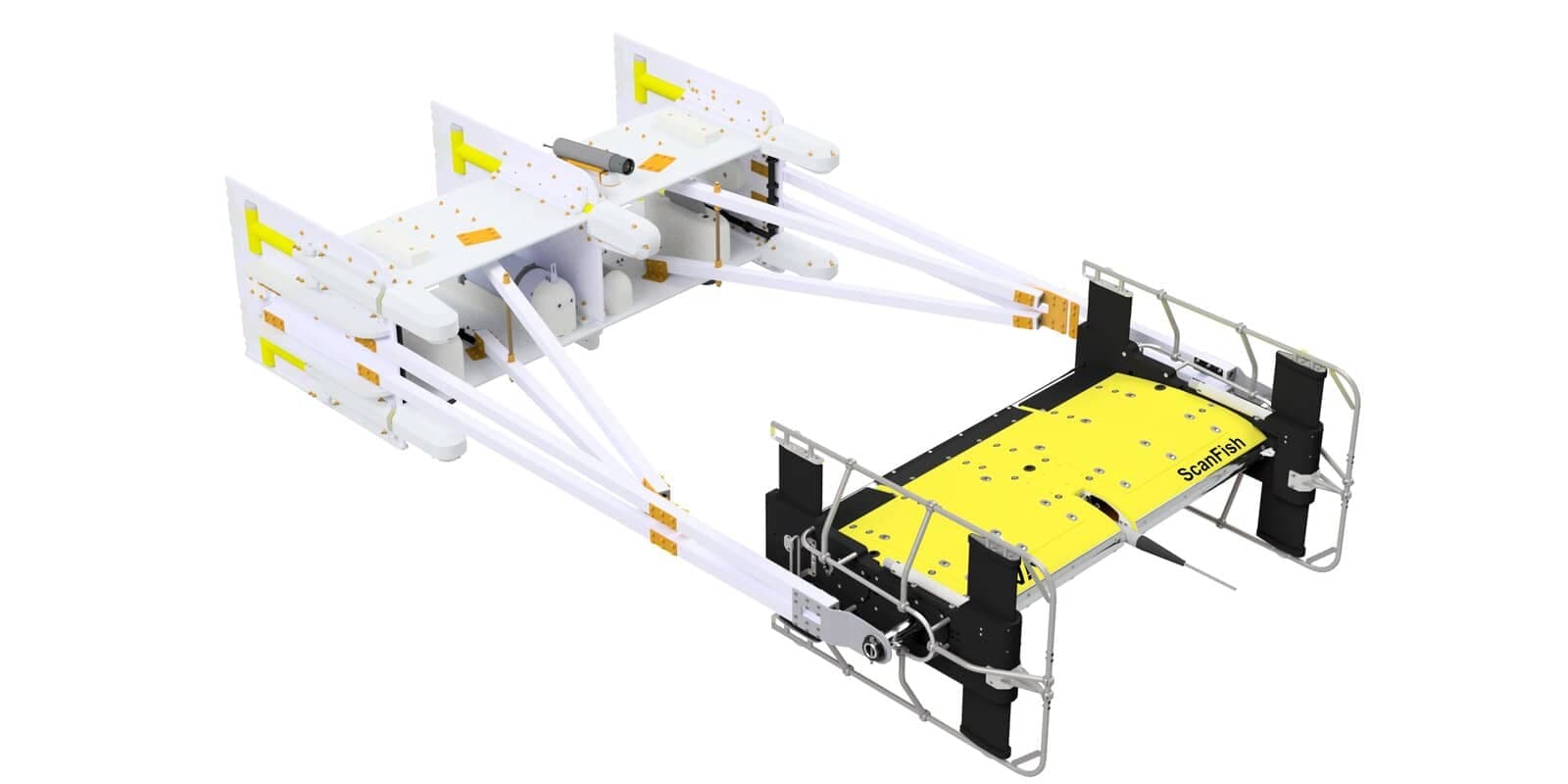
For a new application, EIVA added a Sub-bottom Imaging Frame to the existing ScanFish Katria platform, combining high-resolution 3D sub-bottom imaging with advanced magnetometer sensing on a single towed body. The frame changes the hydrodynamics of the whole vehicle, and a towed platform that is not in balance will roll, pitch or yaw instead of flying straight, which degrades the data from the sensors it carries.
EIVA simulated the complete assembly in AirShaper to quantify the moments acting on it, then rebalanced the frame by adding and removing material until pitch, roll and yaw were close to neutral. Field trials confirmed stable operation.
Keeping a Towed Platform Neutral in Pitch, Roll and Yaw
The ScanFish Katria is an actively controlled towed vehicle. Mounting a large sensor frame behind it adds structure, instrument housings and floats, all of which generate hydrodynamic forces as the assembly is towed. If those forces do not act symmetrically about the vehicle's axes, the result is a steady rolling, pitching or yawing moment that the platform has to fight continuously.
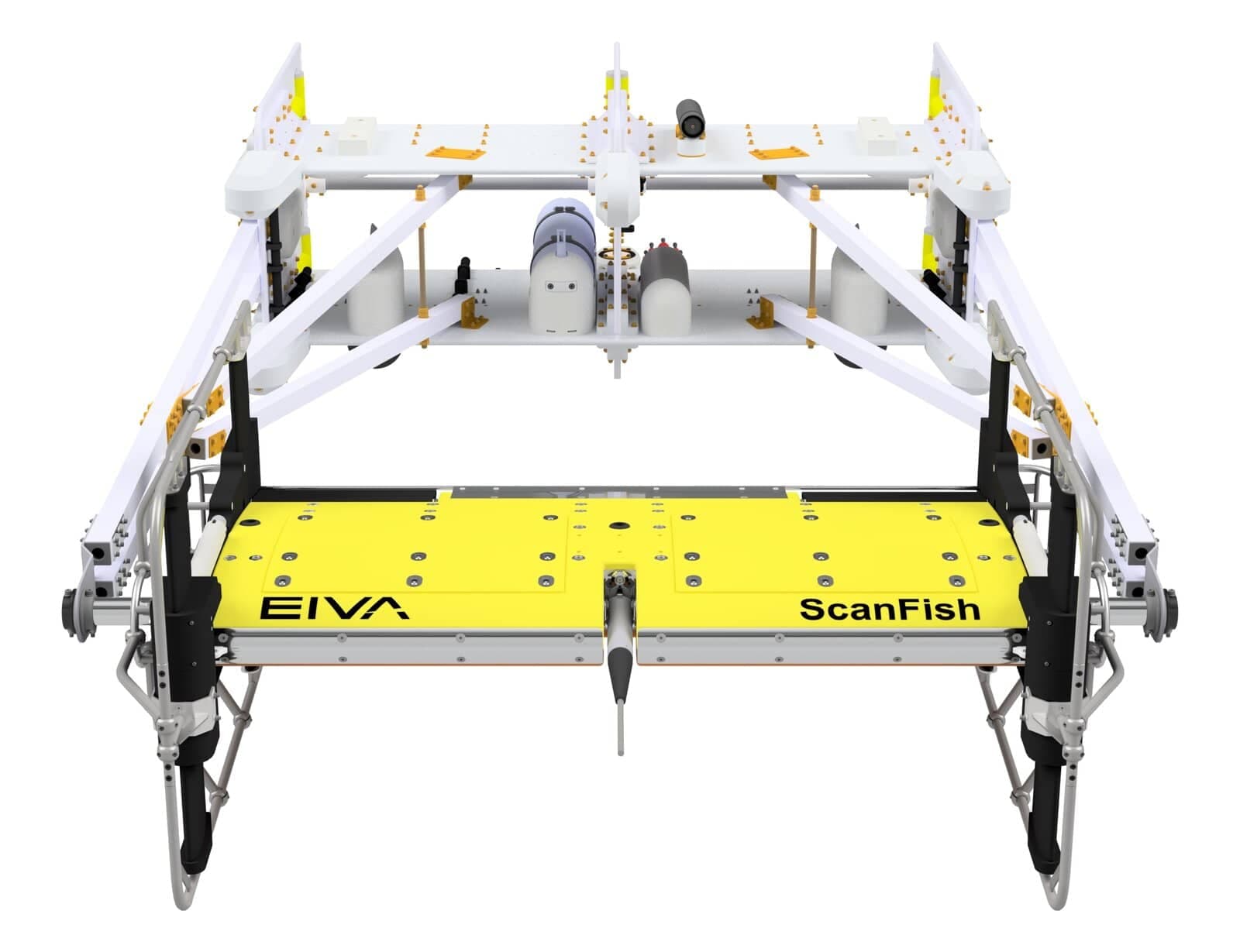
The challenge was therefore to maintain neutral pitch, roll and yaw stability with the new frame attached, so the combined vehicle flies straight and level and both the sub-bottom imaging and the magnetometer data stay clean.
The SolutionQuantify the Moments in CFD, Then Balance the Forces
Rather than iterate in the water, EIVA analysed the moments in CFD and balanced the forces on the frame by adding and subtracting material: more surface or volume where a counteracting force was needed, less where an existing component was pushing the vehicle away from its neutral position.
Simulating the full assembly
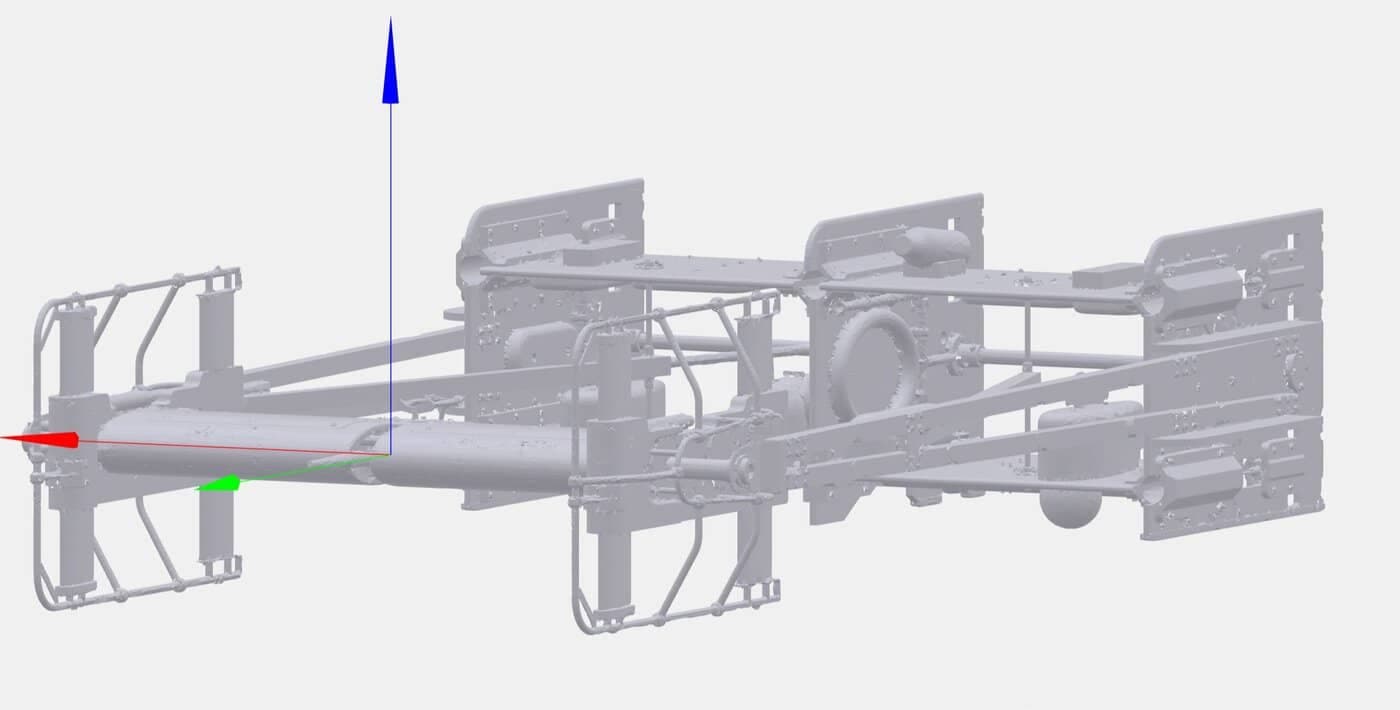
The complete ScanFish Katria with the Sub-bottom Imaging Frame was simulated in AirShaper as one body. Besides the drag and lift, AirShaper reports the moments about the three body axes, which is exactly what a stability assessment needs: a non-zero roll or yaw moment at the design tow speed points directly at an imbalance in the geometry.
Reading the flow
Comparing the original and the rebalanced frame side by side in AirShaper shows where the flow separates and where the losses sit. The red regions mark the zones of total-pressure loss, which is where drag and the associated off-axis forces are generated. In the original design these zones are distributed unevenly across the frame; in the new design the pattern is far more symmetric, while the overall drag coefficient stays the same.
The recording below rotates around both frames in AirShaper's comparison view, original on the left and rebalanced on the right.
A Balanced Frame, Confirmed at Sea
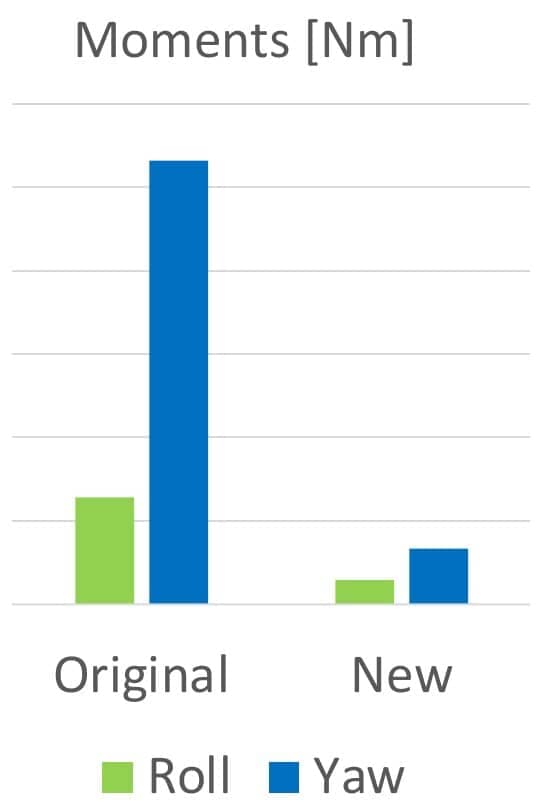
The rebalanced frame cut both off-axis moments to a fraction of their original values. Read from EIVA's results chart, the roll moment dropped from roughly 13 Nm to roughly 3 Nm and the yaw moment from roughly 53 Nm to roughly 7 Nm.
| Moment | Original → New |
|---|---|
| Roll | ≈ 13 Nm → ≈ 3 Nm |
| Yaw | ≈ 53 Nm → ≈ 7 Nm |
| Drag coefficient | 0.576 → 0.576 |
| Frontal area | 0.971 m² → 0.933 m² |
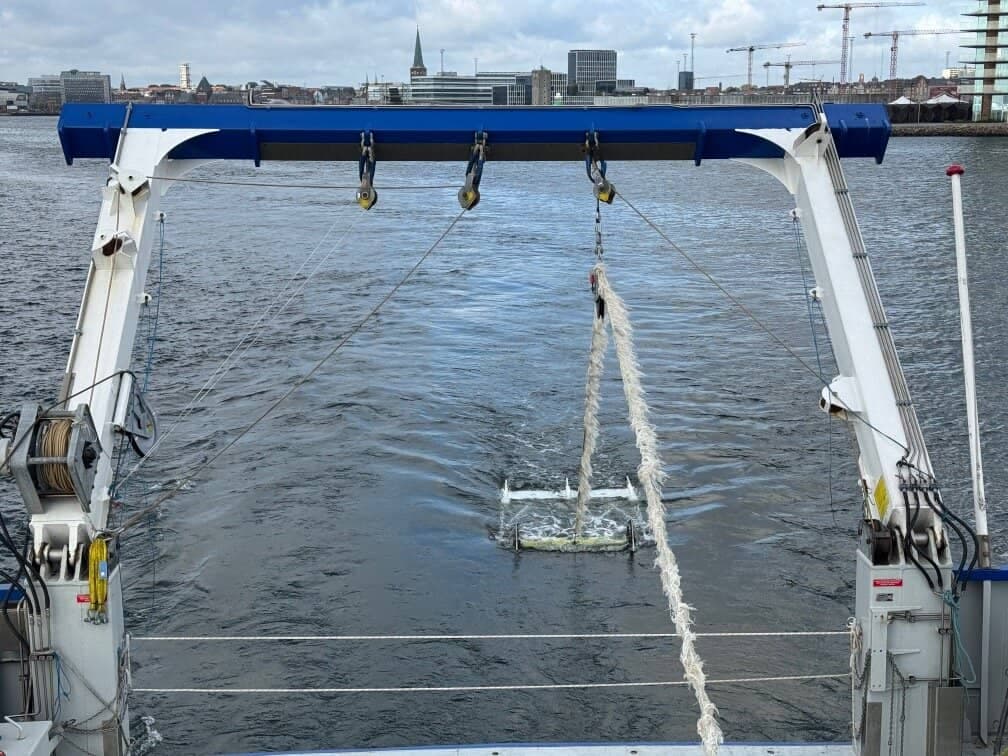
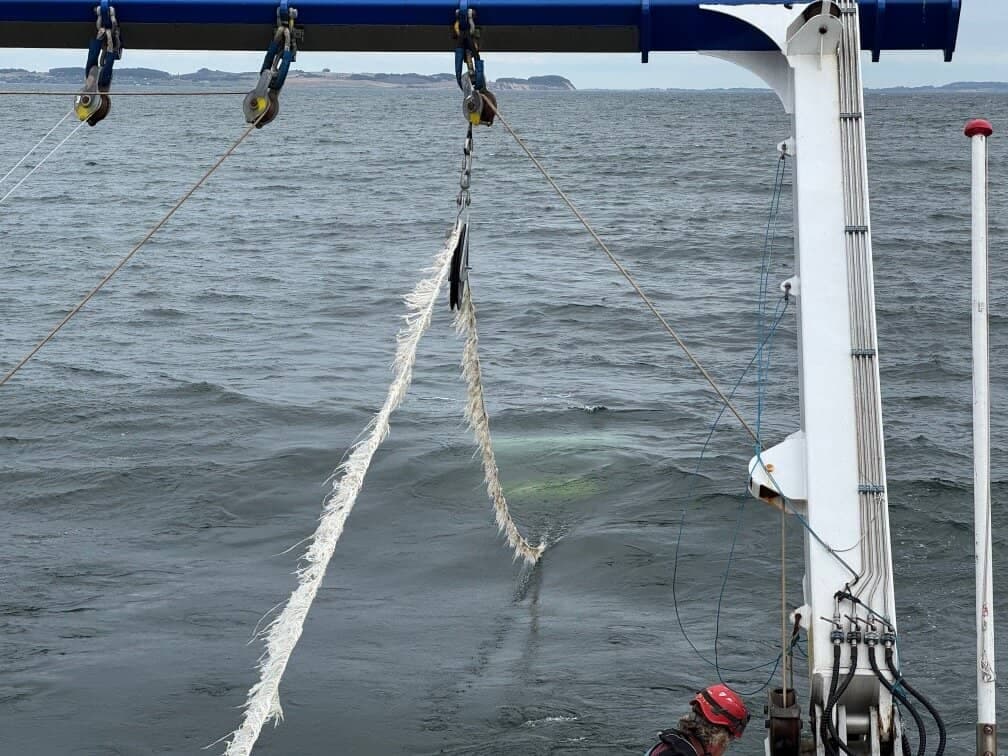
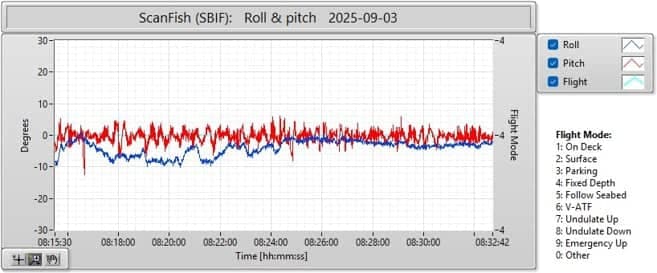
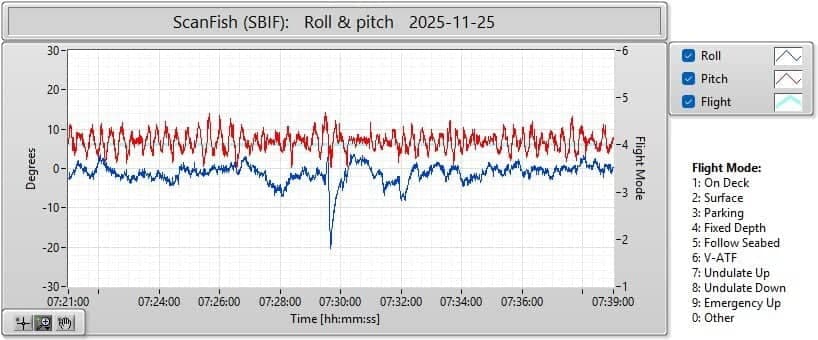
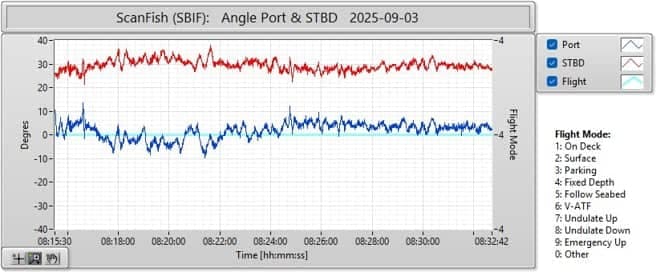
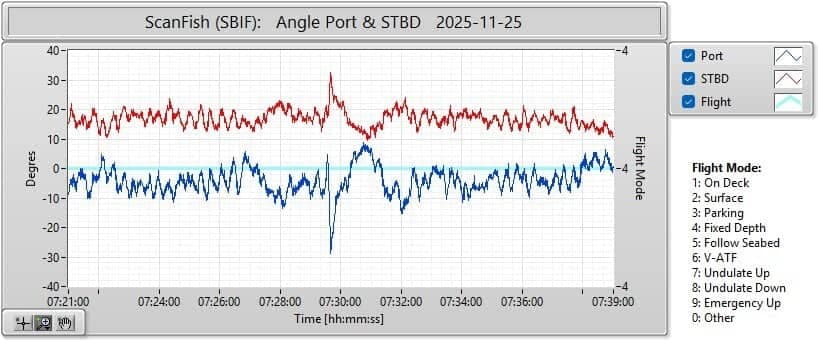
With the moments brought close to neutral in simulation, the frame went to sea. Trials in the harbour and offshore confirmed stable operation in the field.
Original
New
Original
Pitch
New
Original
Yaw
New
Conclusion
Towed survey platforms live or die by their stability: every degree of roll or yaw shows up in the sensor data. By treating the ScanFish Katria and its new Sub-bottom Imaging Frame as one hydrodynamic body in AirShaper, EIVA could see the moments that would have made the vehicle fly off axis and balance them out on the drawing board, rather than discovering them behind the ship.
For teams building towed or submerged equipment, the same approach applies to any add-on that changes the shape of a vehicle: simulate the whole assembly, read the moments about the body axes, and adjust the geometry until they are neutral.